Deposit Doubts: Auditing Britain’s Reusable Coffee Cup Experiment
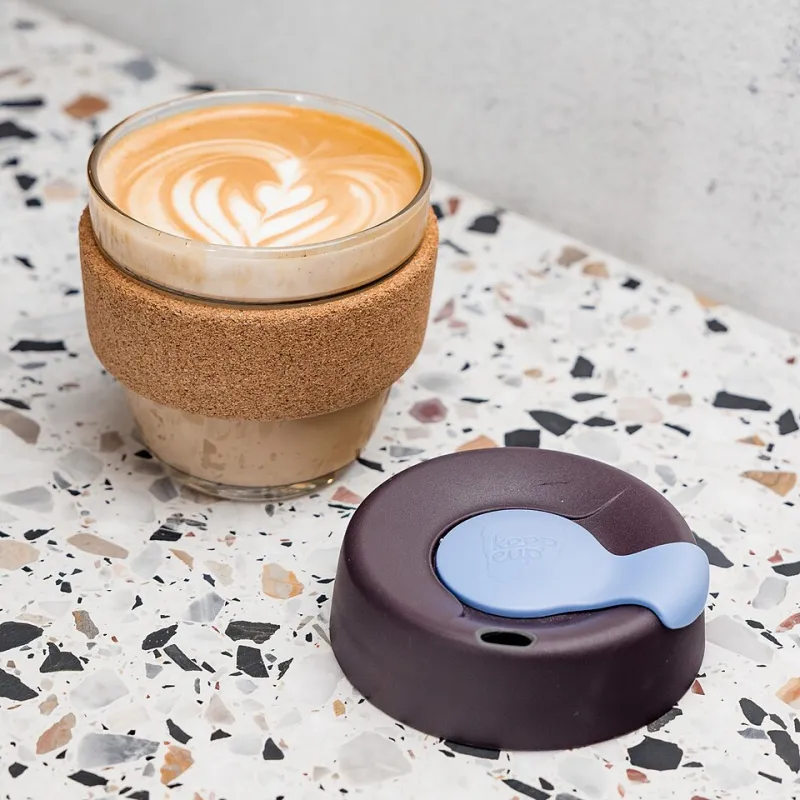
Photo: Keepcupwiki, CC BY-SA 4.0, via Wikimedia Commons
Reusable coffee cup schemes sound almost too sensible. You pay a small deposit, take your coffee in a sturdy cup, bring it back next time, and the loop closes. No single-use cup in the bin, no guilt in the car footwell, no new cup every morning. In theory, everybody wins. In practice, Britain's reusable cup experiment has been a masterclass in good intentions meeting messy human behaviour.
The problem is not that people hate the planet. The problem is that a reusable cup is a small object with a big job, and it has to survive the commute, the dishwasher, the bottom of a bag and the Tuesday when you forget it entirely. A deposit is supposed to make you remember. Often it just makes you feel mildly annoyed while you buy another coffee in a paper cup.
The promise, and the pile of unreturned cups
Most UK schemes follow the same rough template. You pay a deposit, usually somewhere between £1 and £5, or you join a subscription or token system. The café gives you a reusable cup. Bring it back and you get your deposit back, or swap it for a clean one. Some schemes offer a small discount on your drink, often 20p to 50p, to sweeten the deal.
On paper, the loop is elegant. In a busy café, it can be chaos. Staff have to log deposits, store dirty cups, wash them to a decent standard, manage stock and explain the scheme to customers who mostly want to order a flat white and leave. A cup that is not returned is not just an environmental failure. It is a financial one. The café has paid for a cup, lost the deposit revenue, and may have to buy replacements. Multiply that across a few hundred customers and the 'simple swap' becomes an inventory problem.
Then there is the customer side. Reusable cups are easy to leave in a car, a desk drawer or a gym locker. They are awkward to carry if you are going straight to a meeting. They are not always welcome at every café, which undermines the whole point of a universal scheme. And a deposit only works if the return is convenient. If you have to go out of your way to claim back £2, many people will quietly donate the cup to the back of a cupboard and move on.
Follow the deposit
The money tells a story. A deposit is not really a price. It is a behavioural nudge with an accounting entry attached. In a well-run scheme, deposits fund replacement cups and the logistics of washing and collection. In a badly run scheme, they become an accidental subsidy: customers pay the deposit, forget the cup, and the café keeps both the cup and the cash. That may look like profit, but it is not a business model. It is leakage.
The more interesting cost is staff time. Reusable cups do not wash themselves. A café with a small pot sink and a busy morning does not have a spare person to scrub cups between orders. Some independents have solved this by partnering with a cup library or a subscription service that handles collection and washing. Others have gone the low-tech route: a shelf of borrowed cups, a paper list and a lot of trust. Neither is free.
And yet the single-use cup has not disappeared. In 2026, the UK coffee shop still runs on paper cups because they are cheap, light, stackable and require no explanation. A reusable scheme has to beat that convenience, not just match it. A 20p discount is not much of a motivational speech when you are running for a train.
What is actually working in 2026
The schemes that seem to work are not the most ambitious ones. They are the ones that make returning a cup almost as easy as throwing one away. That means drop-off points on a familiar route, not a single café halfway across town. It means cups that stack, lids that do not leak, and washing systems that do not depend on a heroic barista. It means clear signage at the till, not a laminated poster nobody reads.
Bring-your-own-cup discounts are still the simplest and most effective intervention. They do not require a deposit, a logbook or a stockroom. They reward the people who already own a reusable cup and gently nudge everyone else. The weakness is obvious: they only work for customers who remember. But they are cheap to run and easy to understand, which counts for a lot in a sector running on thin margins.
Deposit schemes work better when they are shared. A single café running its own cup pool is asking customers to change their routine for one stop. A group of cafés, a market, a business improvement district or a transport hub running a common scheme gives the cup a chance to circulate. The moment a customer can return a cup at the next café rather than the original one, the loop starts to make sense.
The awkward behavioural truth
Reusable cups ask people to plan. Coffee is often an impulse purchase. That mismatch is the heart of the problem. You do not always know at 7.45am that you will want a coffee at 3pm, and you certainly do not know which café you will be near. A scheme that depends on perfect foresight will always lose to a paper cup that is sitting right there.
The answer is not to shame customers. Shame does not scale. Neither does a deposit that feels like a punishment. The most useful schemes reduce friction: put return points where people already walk, make the cup pleasant to use, and accept that some cups will be lost. That is not failure. That is the cost of running a loop in the real world.
A genuinely useful scheme would need three things: a shared return network, a deposit high enough to matter but low enough not to sting, and a washing and logistics plan that does not rely on café staff doing unpaid environmental labour. It would also need honesty about the numbers. If a scheme loses 30 per cent of its cups, say so. If the carbon savings are smaller than the marketing suggests, say that too. Coffee drinkers are not stupid. They can handle a bit of nuance with their flat white.
The reusable cup is still a good idea. It is just not a magic one. Britain's experiment has proved that behaviour change is not a deposit away. It needs convenience, consistency and a cup that comes back. Until then, the lonely reusable cup in the cupboard is not a symbol of failure. It is a reminder that the loop only works when it is easier to close than to ignore.