The After-Hours Espresso Club: Why UK Coffee Bars Are Staying Up Late
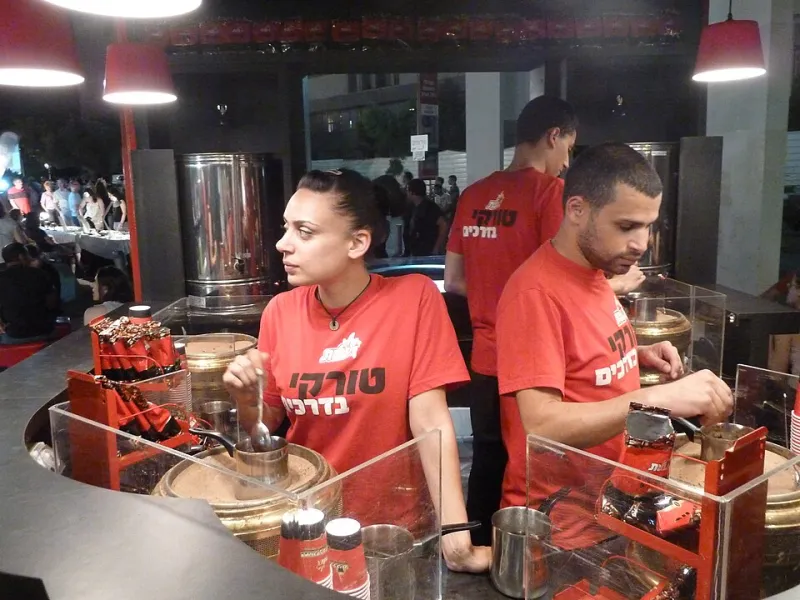
Photo: Deror_avi, CC BY-SA 3.0, via Wikimedia Commons
It is 9.15pm on a Thursday in Glasgow and the espresso machine is still warm. A group of four is sharing a table near the window, nursing espresso tonics and a cold brew highball. The music is low, the lights are dimmer than they were at lunchtime, and nobody is shouting over a football match. This is not a pub. It is a coffee bar that has decided the day does not have to end at 6pm.
Not so long ago, the UK specialty coffee shop kept pub hours in reverse. Open early, closed by late afternoon, shutters down before the evening trade began. In 2026, a small but growing number of bars are testing the after-eight shift. They are not turning into pubs with portafilters. They are trying to build a different kind of night out: quieter, slower, and built around coffee rather than alcohol.
Why coffee is challenging the pub
The reasons are not hard to find. Pub closures have removed some of the easy places to gather. Sobriety and moderation are less fringe than they were. The cost of a night out has risen, and a £4 espresso tonic looks reasonable next to a round of pints. Younger customers in particular seem less fixed on alcohol as the default social lubricant. Coffee bars already have the room, the seating and the community feel. Extending the hours is one way to use them.
There is also a cultural gap. The UK has plenty of places to drink coffee in the morning and plenty of places to drink alcohol at night. What it has less of is a middle ground: a warm room, good drinks, low music and no expectation to get drunk. That gap is where late-night coffee is trying to live. It is less about replacing the pub than about giving people another option on the high street.
How the economics work
Evening coffee is not simply a case of keeping the lights on and hoping. The margins have to come from somewhere. Most of the bars making it work have built a separate evening menu: espresso tonic, cold brew spritz, cascara soda, coffee negroni without the gin, small desserts, cheese toasties, maybe a short list of low-alcohol or alcohol-free drinks. The coffee is still central, but it is not the only reason to stay.
Events help too. A ticketed listening night, a cupping session, a book club or a local maker's market gives people a reason to come after eight and gives the bar a predictable bump in revenue. Pre-batched drinks and a shorter menu keep staffing manageable. A smaller evening team can run the room without the full daytime crew. Some bars share the space with a bakery or restaurant, which spreads the rent across more hours.
The costs are real. Staffing late shifts can be harder than early ones. Public transport thins out after 10pm. Insurance, licensing and noise rules matter if there is music or a crowd outside. A coffee bar is not a pub, but it still needs to think like a venue. The ones that last are usually the ones that treat the evening as a regular rhythm, not a one-off party.
A short late-night coffee tour
Bristol. The city's independent streak shows up in after-dark espresso bars that pair short drinks with vinyl and low lighting. The mood is closer to a listening room than a cocktail bar, and the menu is small enough to be confident. It is the kind of place where one espresso turns into two because the record is not finished yet.
Leeds. Late-night coffee in Leeds tends to lean social: dessert-style drinks, sharing plates and event nights that give the room a reason to stay open. The best versions feel like an extension of the daytime café rather than a costume change. Same beans, different pace.
Glasgow. Glasgow has a strong claim to the late-night coffee conversation, with bars using music, community nights and alcohol-free drinks to keep the room alive after eight. The city's pub culture is formidable, but that is exactly why a quieter alternative can find an audience. It does not have to compete on volume. It just has to be good.
Can it last?
Late-night coffee will not save every high street, and it should not try. A bar needs the right location, the right lease and a customer base that actually wants to go out after dark. But the trend is more than a novelty. It speaks to a shift in how people want to socialise: less pressure, less spend, more room to talk. Coffee already has a strong claim on the daytime. The question for 2026 is whether it can hold a small, useful piece of the night as well.
The answer will not be found in a single espresso. It will be found in the ordinary Thursday nights, when the machine is still on, the music is low, and the door is still open.