The Date on Your Coffee Bag Is Not the Date You Think
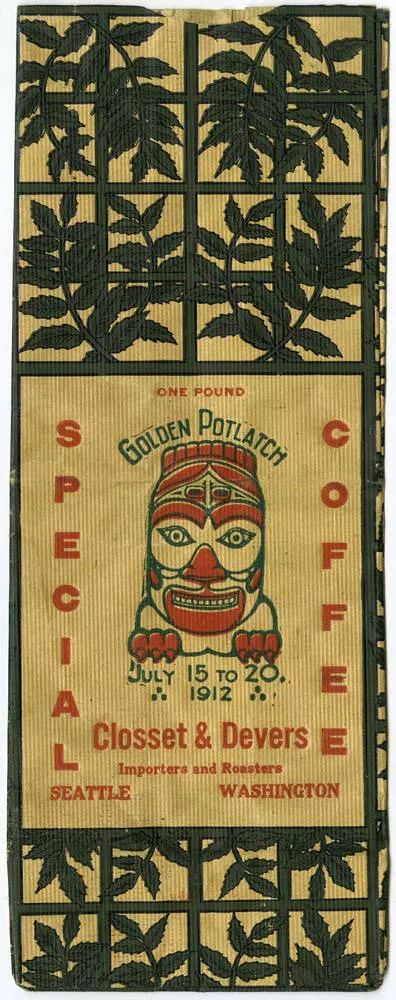
Photo: Closset & Devers, Public domain, via Wikimedia Commons
Pick up a bag of coffee in a UK supermarket and you will find a best-before date. It might say something like 'Best Before End: December 2026'. It looks reassuring. It suggests the coffee inside is fresh, safe, and ready to drink. But that date is not telling you what you think it is telling you. For anyone who cares about flavour, the only date that matters is the one many supermarket bags do not print: the roast date.
Best-before is about the bag, not the bean
Best-before dates on coffee are a legal and retail tool. They indicate a period during which the product is expected to be at an acceptable quality — not a moment of peak flavour. For pre-packaged coffee, that window can be long. Supermarkets need shelf life. A bag that sits in a warehouse, travels to a distribution centre, and waits on a shelf for months needs a date that accommodates all of that.
The result is a bag that can be legally 'fresh' long after the coffee inside has lost the aromas that made it worth buying. Coffee is not like a tin of beans. It is a roasted agricultural product that starts declining the moment it leaves the roaster. The best-before date is a boundary, not a guarantee.
Roast date is the one that counts
Specialty roasters print the date the beans were roasted. This is the date you want. A bag roasted last week is a different product from a bag roasted last spring, even if both carry the same best-before month. For filter coffee, many roasters suggest drinking within two to six weeks of roast. For espresso, the window can be a little different, and some beans peak after a week or two of resting. The point is not a single magic number. The point is that the clock starts at the roastery, not at the supermarket checkout.
If a bag has no roast date, ask yourself why. It may still be decent coffee, but you have no way of knowing how old it is. In 2026, with more UK roasters than ever printing clear dates, a missing roast date is a choice.
The degassing clock
Freshly roasted coffee releases carbon dioxide. This is why bags have one-way valves: the CO2 can escape without letting oxygen in. It is also why a bag that is only a day or two old can taste sharp and gassy. The coffee is still settling. A bag that is months old has stopped degassing — not because it is stable, but because the volatile aromas have largely gone.
You can see this in the bloom. When you pour hot water over fresh coffee, the bed puffs up and releases gas. Flat, old coffee barely blooms. It tastes muted, papery, or simply sweet in a one-dimensional way. The bag may still be within its best-before window. The cup tells a different story.
How to read a bag in ten seconds
- Look for a roast date. A printed date like 'Roasted 12/11/26' is what you want. A best-before month is not a substitute.
- Check the valve. A one-way valve is a good sign that the roaster expects the coffee to degas. It is not proof of freshness, but it helps.
- Read the origin and process. A bag that tells you where the coffee came from and how it was processed is usually a bag from someone who cares.
- Check the bag size. Smaller bags make more sense if you drink slowly. A kilo of coffee bought for a bargain is not a bargain if it goes stale before you finish it.
- Avoid vague language. 'Freshly roasted' means nothing without a date. 'Artisan' is not a date either.
Storage that actually works
Once you get the beans home, keep them in an airtight container, away from light and heat. A cupboard is fine. A fridge is not: the moisture and food smells will do the coffee no favours. If you buy more than you can drink in a few weeks, freeze part of it in a sealed bag and grind from frozen. Do not dump a month's supply into a hopper and hope for the best. Grind just before you brew.
The bag itself can be fine for storage if it is resealable and opaque, but a clip on a torn bag is not airtight. Transfer to a proper container once the bag is open. Label it with the roast date if you are the sort of person who forgets.
When best-before is fine
There is a place for supermarket coffee. If you want a jar of pre-ground for the office filter machine and you are not chasing flavour, a best-before date is enough. But if you are buying whole beans, paying specialty prices, and expecting a cup with character, the best-before date is the wrong tool. It tells you the bag has not broken. It does not tell you the coffee is alive.
The next time you pick up a bag, turn it over. Look for the roast date. Smell the valve. Ask when it was roasted. If the answer is vague, put it back. The date on the front is not a lie in the legal sense. It is just not the date you need.