No Wi-Fi, No Mercy: The UK Café Backlash Against the Corner Office
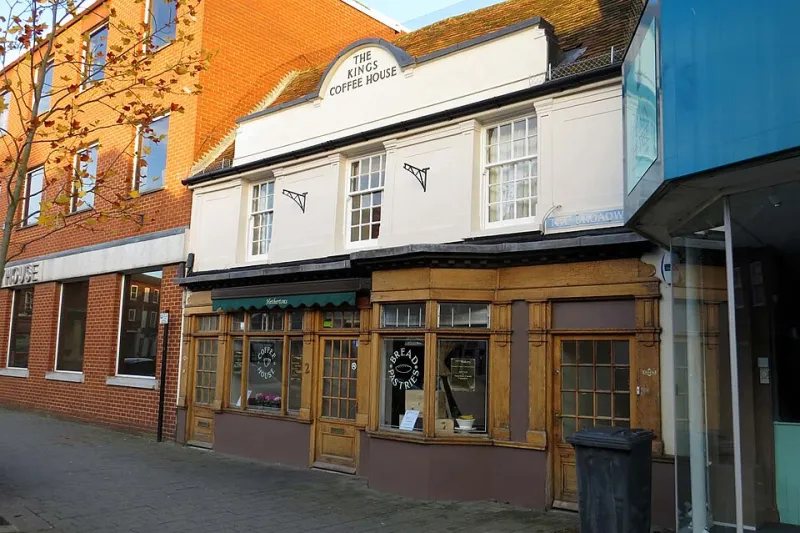
Photo: Annekingsley, CC BY-SA 4.0, via Wikimedia Commons
Walk into a certain kind of UK independent coffee shop in 2026 and you will see a small sign by the plug sockets: no laptops after 11am. Another may have a row of stools marked 'conversation only'. A third has quietly capped its Wi-Fi at 45 minutes, enough to answer emails, not enough to settle in for a full working day. The message is not subtle. The café is no longer an office with a better playlist.
At first glance, this looks like a backlash against remote workers. Look closer and it is really a renegotiation of an unwritten contract that nobody bothered to update after the pandemic. For a few years, cafés became spare desks, meeting rooms and waiting rooms for a flexible workforce. Some owners welcomed the footfall. Others watched their best tables disappear under a single laptop and a cold cup of filter coffee. In 2026, the bill is coming due.
The corner office has been downsized to a corner table
There is a romance to the laptop-friendly café. It promises freedom: no commute, no fluorescent lighting, no manager hovering by your desk. But the economics are less romantic. A four-seat table in a decent UK independent might turn over three or four times during a busy lunch hour. One remote worker with a £3.60 filter coffee can occupy that same table for four hours. Even if they buy a second coffee, the spend per seat is poor. Rent, wages, energy, milk, machine maintenance and card fees do not care about your deadline.
This is why the laptop ban often arrives disguised as something softer. A café might introduce 'laptop-free tables' rather than a blanket ban, or reserve the back room for workers and keep the window seats for conversation. Others use time limits: 90 minutes at peak, no restrictions after 3pm. The point is not to punish anyone. It is to protect the thing that makes a café worth visiting in the first place: a bit of atmosphere.
A café full of silent screens is a café that feels closed to conversation. That matters more than some owners expected. Regulars who meet for a Saturday coffee, parents with prams, friends who haven't seen each other in months, and people who simply want to read a book without a spreadsheet glowing nearby all contribute to the room's character. If every table is a hot desk, the room starts to feel like a library with a coffee machine. Fine for some, but not for everyone.
Who actually wins when the laptop lid closes?
The obvious winners are café owners and the customers who want a seat. Table turnover improves, the room feels livelier, and staff spend less time navigating passive-aggressive disputes over plug sockets. There is also a quieter win for the local economy: a café that works as a social space tends to build a broader base of regulars than one that depends on a handful of all-day workers.
But it would be dishonest to pretend there are no losers. Remote workers are not freeloaders by default. Some are self-employed and genuinely have nowhere else to go. Some are carers, new parents or people with mobility issues for whom a café is a more accessible workspace than a co-working desk. A blanket ban can feel like a door closing on people who already have enough doors closed.
The better version of the laptop ban is not a war on remote work. It is zoning. Give the workers a corner with plugs and a clear time limit. Keep the window and the big communal table for groups. Put the policy on the menu, not in a passive-aggressive note taped to the milk fridge. Customers can handle rules if they are clear and consistent. What they cannot handle is a barista asking them to move after 40 minutes when the sign said nothing at all.
A passing gimmick, or a lasting correction?
The laptop-free café is probably not a passing gimmick. It is a correction to a strange period when every flat surface became a desk and every café became a co-working space by default. The correction will not be uniform. A quiet café near a railway station may still welcome laptops before the commuter rush. A neighbourhood spot with a lunch trade may decide that 11am to 3pm is for plates, not PDFs. A specialist coffee bar with twelve seats may ban laptops entirely because the room is simply too small to do anything else.
That is fine. The UK café scene has never been one thing. The mistake would be pretending that 'laptop-friendly' is a neutral setting with no costs. Someone pays for the person who spends four hours at a table with one drink. Usually it is the café, and then the next customer who cannot find a seat.
The laptop-free latte is not a moral judgment on remote work. It is a renegotiation of who the café is for. In 2026, more UK independents are deciding that a café should be a place to talk, meet, read, argue and linger over coffee, not just a waiting room with a Wi-Fi password. That is not a war on the corner office. It is a reminder that the corner office was never meant to be a corner table.